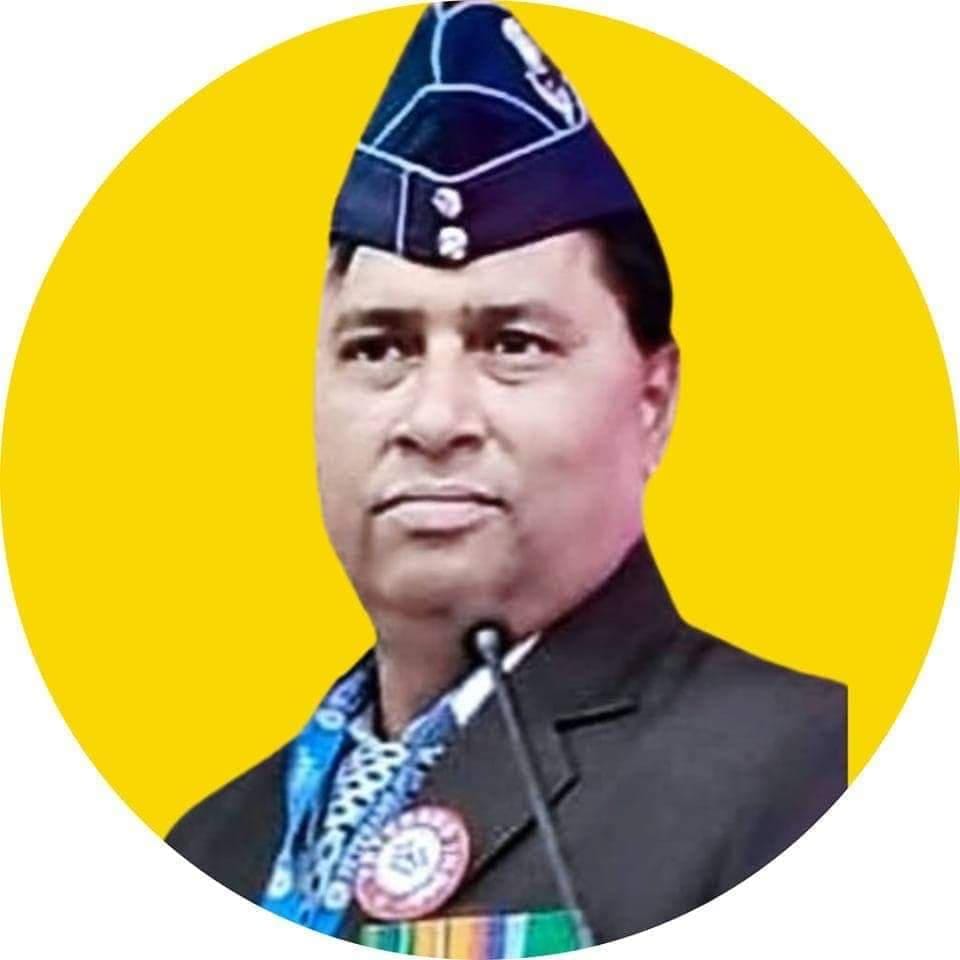
Anand Kumar Ashodhiya
Author | Poet | Researcher
Summary: This peer-reviewed research article critically examines feminine trauma, cultural resistance, ethical consciousness, and feminist folk discourse in contemporary Haryanvi Ragnis through the interdisciplinary frameworks of Pingal Shastra, oral tradition studies, cultural semiotics, and folk-performance theory.
The study explores how contemporary Haryanvi Ragni functions as a performative medium of social critique, gendered consciousness, vernacular ethics, and regional cultural memory within North Indian oral-literary traditions.
Feminine Trauma, Cultural Resistance and Pingal-Structured Social Consciousness
This article forms part of the ongoing scholarly research corpus on contemporary Haryanvi Ragni literature, Pingal Shastra, oral-performance traditions, feminist folk discourse, and vernacular cultural studies by Anand Kumar Ashodhiya.
📄 Article Details
Author: Anand Kumar Ashodhiya
Journal: ShodhPatra: International Journal of Science and Humanities (SPIJSH)
ISSN: 3048-6041
Volume: 3 | Issue: 5 | Month: May 2026
Pages: 304–312
Journal DOI:
10.70558/SPIJSH.2026.v3.i5.45755
Zenodo DOI:
10.5281/zenodo.20411315
Paper ID: SPIJSH45755
🔑 Keywords
Haryanvi Ragni; Pingal Shastra; Saang Tradition; Feminist Folk Discourse; Oral Tradition; Cultural Semiotics; Gendered Trauma; Folk Performance; Vernacular Ethics; North Indian Folk Poetics; Social Resistance
📖 Abstract
The present study examines the representation of feminine trauma, cultural resistance, and ethical consciousness in selected contemporary Haryanvi Ragnis composed by Anand Kumar Ashodhiya.
Focusing on the compositions “सातमा फेरा,” “निर्भया,” “देश की बेटी म्हारी बेटी,” “रील बणावण के चक्कर में,” “कन्या रतन लक्ष्मी,” and “धोखे की गाथा,” the article investigates how the Haryanvi Saang-Ragni tradition functions as a performative medium of social critique, moral reflection, and regional cultural memory.
The study argues that contemporary Haryanvi Ragni has evolved beyond entertainment-oriented folk expression into a vernacular discourse capable of addressing dowry violence, gender insecurity, institutional apathy, digital exhibitionism, emotional commodification, and the fragmentation of social relationships.
The research adopts an interdisciplinary qualitative methodology combining textual interpretation, oral-performance studies, feminist literary criticism, cultural semiotics, and Pingal-based prosodic analysis. Particular attention is given to the interaction between thematic intensity and oral-musical structure.
The article demonstrates that Samamatrik rhythmic organization, Yati placement, refrain systems, cadence patterns, and Antya-Anupras structures significantly enhance emotional participation and collective ethical reception during performance.
The study further establishes that these Ragnis preserve indigenous oral aesthetics while simultaneously articulating contemporary social anxieties rooted in North Indian rural and semi-urban life.
Through close literary and prosodic analysis, the article identifies a significant gap in existing scholarship concerning the integrated study of feminist folk discourse, oral-performance theory, socio-psychological interpretation, and Pingal prosody within Haryanvi literary traditions.
Consequently, the research positions contemporary Haryanvi Ragni as an important archive of regional consciousness, cultural resistance, and vernacular ethical expression within modern Indian folk literature.
📚 Citation (APA Style)
Ashodhiya, A. K. (2026).
Feminine Trauma, Cultural Resistance, and Pingal-Structured Social Consciousness in Contemporary Haryanvi Ragni Tradition.
ShodhPatra: International Journal of Science and Humanities, 3(5), 304–312.
https://doi.org/10.70558/SPIJSH.2026.v3.i5.45755
📄 Full Paper (PDF Preview)
⬇ Download PDF | View Published PDF | View on Zenodo
🔗 Related Research in this Series
- Cultural Transition, Ecological Anxiety and Digital Alienation
- War, Viraha, Folk Feminine Consciousness and Pingal Poetics
- Adharajan (Ragini 17–23)
- Adharajan (Ragini 24–30)
📚 Related Books
- Avikavani — Contemporary Haryanvi Ragni Collection
- Adhirājan — Folk Epic (Ragni Tradition)
- Heer Ranjha — Haryanvi Folk Literary Work
📊 Citation & Research Index
👉 View Citation Index & DOI-linked Research →
📚 View All Articles
📄 View Publications
⬅ Back to Home
📖 Technical Research Documentation
For detailed prosodic methodologies and extended bibliographic records, please visit the official project Wiki:
- Research Wiki Home – Mission and project overview.
- Pingala Shastra Methodology – Technical framework for Haryanvi Ragni analysis.
- Bibliography & Research Index – Complete list of ISBN books and DOI-indexed papers.
- Glossary of Haryanvi Prosodic Terms – Glossary of Haryanvi Prosodic Terms (Pingal Shastra).
🌐 Official Academic & Research Profiles
- 🚀 Google Scholar: Full Citation Index & Impact Metrics
- 🆔 ORCID iD: 0009-0005-1592-0592 (Verified Researcher Record)
- 📂 Zenodo Archive: DOI-Indexed Research Repository
- 🌍 OpenAIRE: European Open Science Discovery Portal
- 🎓 Academia.edu: Independent Researcher Profile
Citation counts, indexing records, and metadata visibility are periodically updated by their respective platforms. For formal scholarly reference, please use permanent identifiers and DOI-linked resources wherever available.
© 2026 Anand Kumar Ashodhiya | Independent Researcher & Former Warrant Officer, Indian Air Force